Pages

30 January 2011

Magnificent Tour of the Vatican!

Magnificent Tour of the Vatican!

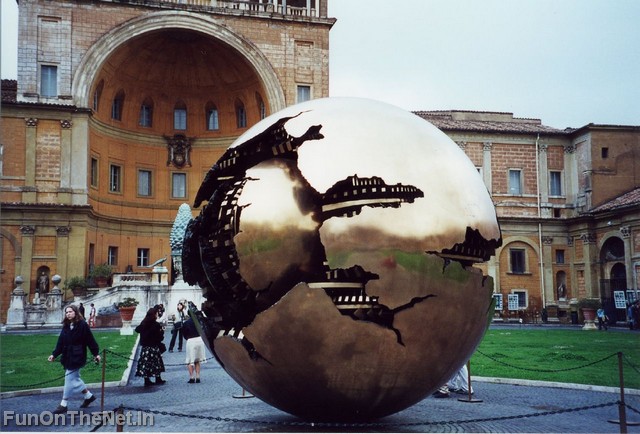
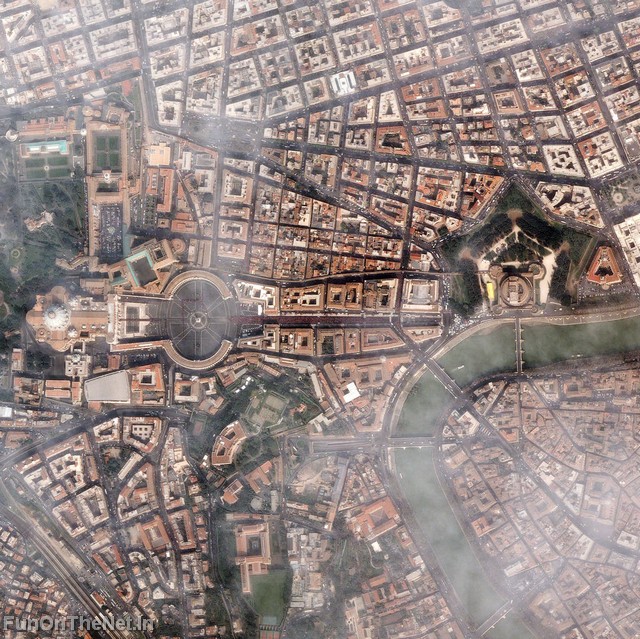
 Vatican City officially the State of the Vatican City is a landlocked sovereign city-state whose territory consists of a walled enclave within the city of Rome. At approximately 44 hectares (110 acres), and with a population of around 800, it is the smallest independent state in the world by both population and area.

Magnificent Tour of the Vatican! 

Vatican
Vatican
Vatican
The Vatican City is a city-state that came into existence in 1929 and is thus clearly distinct from the central authority of the Roman Catholic Church, known as the Holy See, which existed long before 1929. Ordinances of Vatican City are published in Italian. Official documents of the Holy See are issued mainly in Latin. The two entities even have distinct passports: the Holy See, not being a country, only issues diplomatic and service passports; the state of Vatican City issues normal passports. In both cases the number of passports issued is extremely limited.
Vatican
Vatican
Vatican
The Lateran Treaty in 1929, which brought the city-state into existence, spoke of it as a new creation (Preamble and Article III), not as a vestige of the much larger Papal States (756-1870) that had previously encompassed central Italy. Most of this territory was absorbed into the Kingdom of Italy in 1860, and the final portion, namely the city of Rome with a small area close to it, ten years later, in 1870.
 Vatican
Vatican
Vatican
Vatican City is a non-hereditary, elected monarchy that is ruled by the Bishop of Rome — the Pope. The highest state functionaries are all clergymen of the Catholic Church. It is the sovereign territory of the Holy See (Sancta Sedes) and the location of the Pope's residence, referred to as the Apostolic Palace.
Vatican
Vatican
Vatican
The Popes have resided in the area that in 1929 became the Vatican City only since the return from Avignon in 1377. Previously, they resided in the Lateran Palace on the Caelian Hill on the opposite side of Rome, which was out of repair in 1377. The signing of the agreements that established the new state took place in the latter building, giving rise to the name of Lateran Pacts, by which they are known.
Vatican
Vatican
Vatican
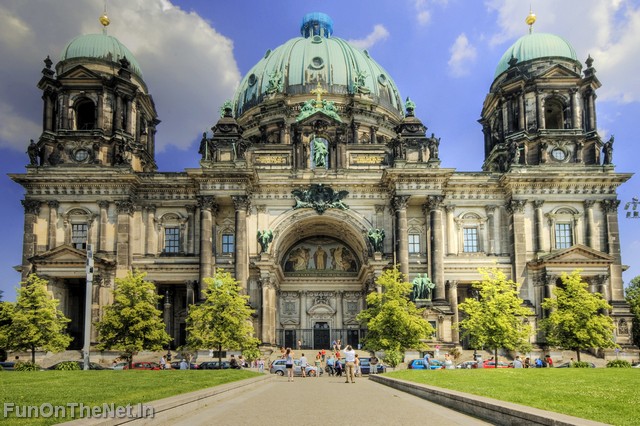
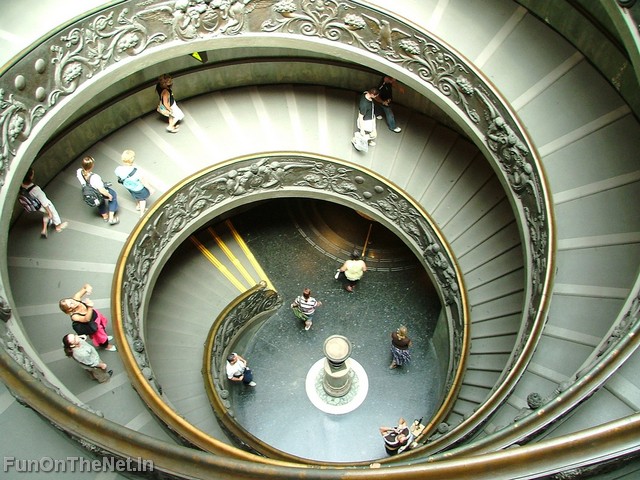
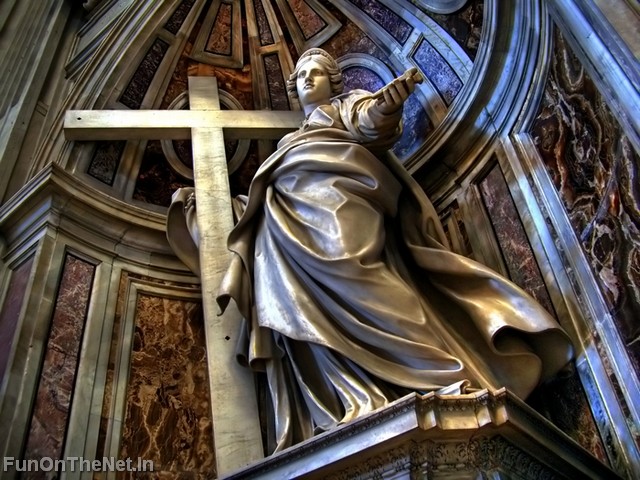
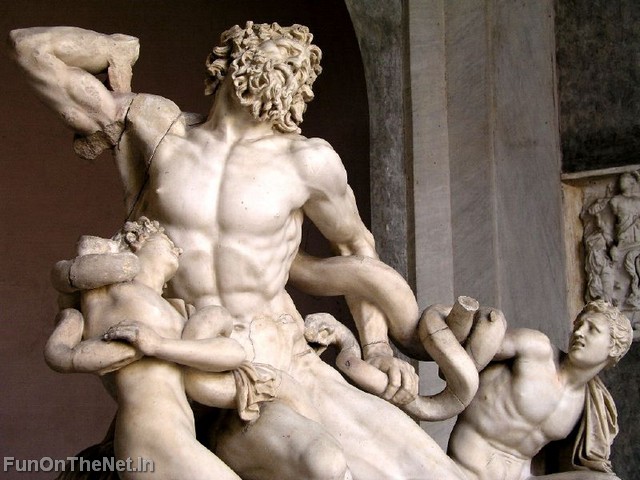
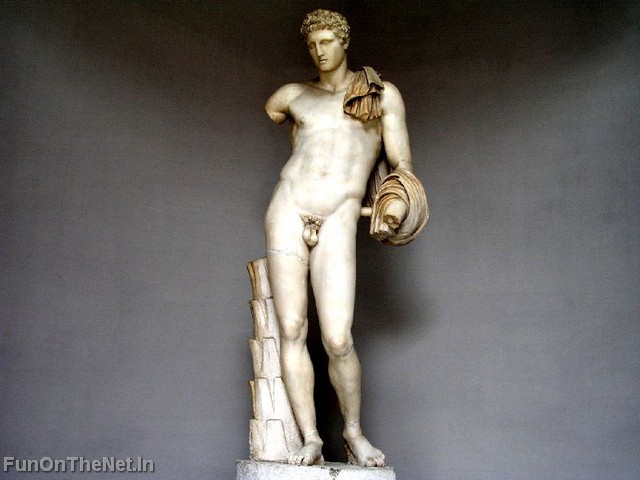
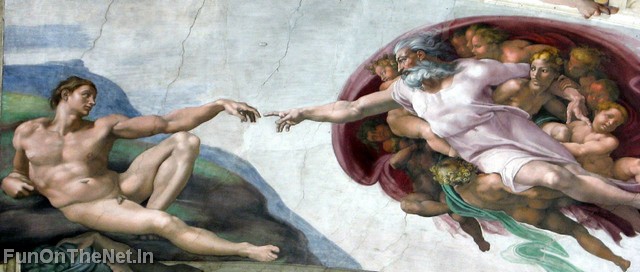
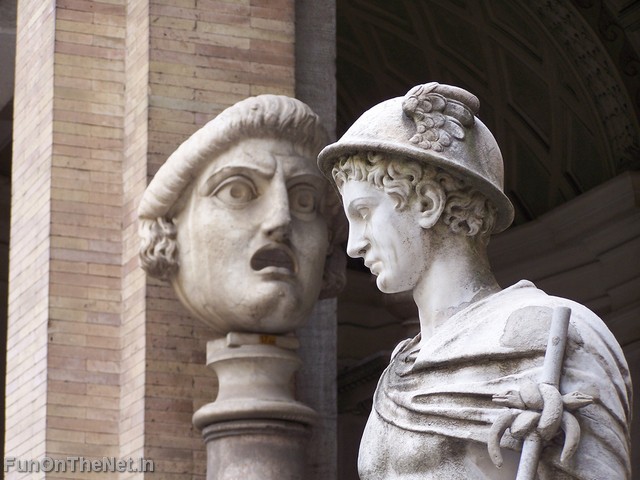
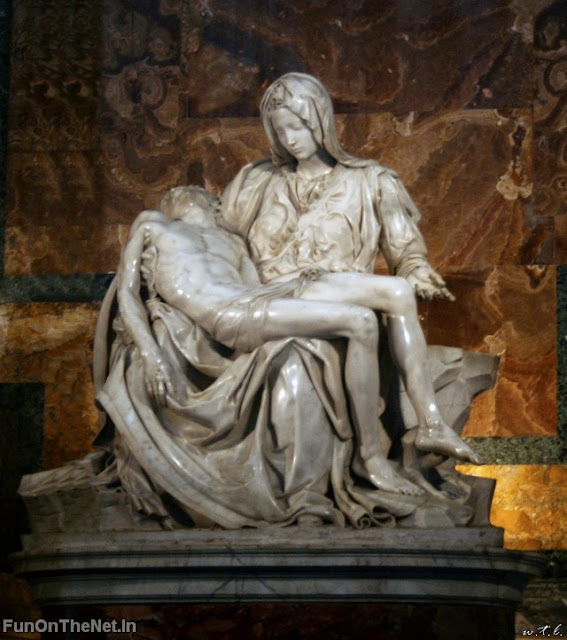
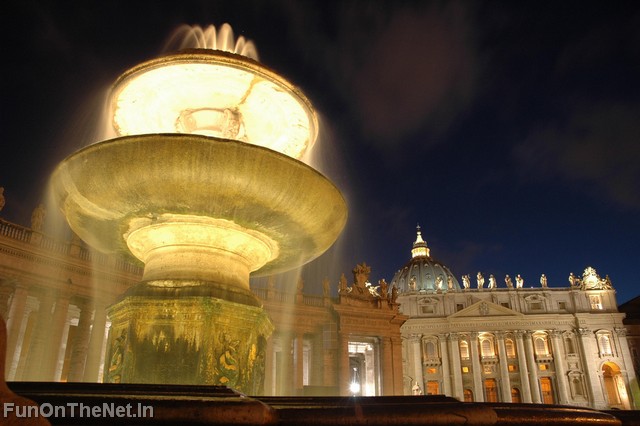
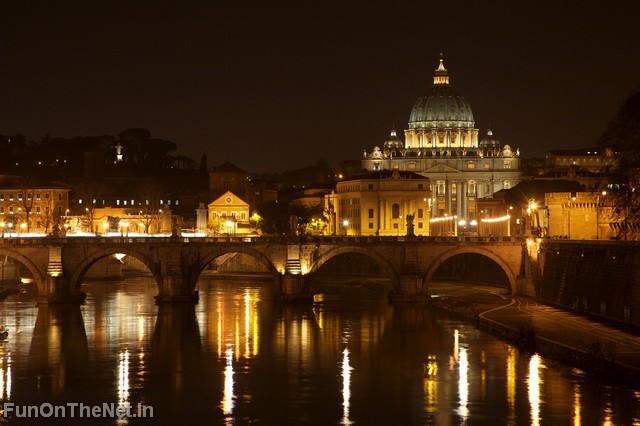
The Vatican City is itself of great cultural significance. Buildings such as St. Peter's Basilica and the Sistine Chapel are home to some of the most famous art in the world, which includes works by artists such as Botticelli, Bernini, Raphael and Michelangelo. The Vatican Library and the collections of the Vatican Museums are of the highest historical, scientific and cultural importance.
Vatican
Vatican
Vatican
In 1984, the Vatican was added by UNESCO to the List of World Heritage Sites; it is the only one to consist of an entire state. Furthermore, it is the only site to date registered with the UNESCO as a centre containing monuments in the "International Register of Cultural Property under Special Protection" according to the 1954 Hague Convention for the Protection of Cultural Property in the Event of Armed Conflict.

Vatican
Vatican
Vatican

How to Tell When Someone is Lying

Watching body language in addition to what is spoken might just save you from being a victim of fraud, or it could help you figure out when somebody’s being genuine. The police do this during an interrogation.
You have to learn the little facial and body expressions that can help you distinguish a lie from the truth. Here are some steps and tips to do so.

  1. Learn to recognize deflections. Usually when people are lying, they will tell stories that are true but are deliberately aimed at not answering the question you asked. If a person responds to the question “Did you ever hit your wife?” with an answer such as “I love my wife, why would I do that?”, the suspect is technically telling a truth, but they are avoiding answering your original question, which usually means they’re lying.
  2. Mind exaggerated details. See if they are telling you too much, like “My mom is living in France, isn’t it nice there? Don’t you like the Eiffel tower? It’s so clean there.” Too many details may tip you off to their desperation to get you to believe them.
  3. We have illustrators, and manipulators. Illustrators are a sign of telling the truth, this is when you are using your hand gestures to talk. moving your hands while you are talking is a sign of telling the truth. We also have manipulators. These, are the opposite of illustrators. An example of a manipulator can be playing with your wrist-watch, your jewelry, pulling on your ear lobe, etc. People who behave this way tend to be hiding something. The last, commonly unknown sign of hiding something is reptile tissue, most people have a reptile tissue in their nose, and it itches when you’re hiding something. But, before you assume that the person is hiding something, please establish a base line.
  4. Base Line: A base line is what someone acts like when they are not lying. You have to get a base line before you proceed with anything. Imagine you have a itch on your nose ever since you got out of bed. And someone thinks you are hiding something because you scratch your nose when answering a question…oops. What the person should have done is establish a baseline. To establish a baseline, you need to see the person when they aren’t lying. Try asking what their name is, and what they do for a living.
  5. Look out for micro-expressions. Micro-expressions are split second facial expressions that flash on a person’s face for a less than a 25th of a second and reveal the person’s true emotion underneath their facade. Some people may be naturally sensitive to them, but almost anybody can easily train to be able to detect microexpressions. Put focus to the upper and lower eyelids, the corner of the eyes, the mouth and the muscles surrounding the mouth, the eyebrows and forehead.
  6. Shaking hands When you meet the person who you think is deceiving you, shake their hand. Take note of the temperature. When you are sure they are lying to you, pretend to be leaving and quickly grab their hand for a “Good-Bye” Handshake. If the temperature is colder, they are fearful.
  7. Notice the person’s eye movements. Contrary to popular belief, a liar does not always avoid eye contact. Humans naturally break eye contact and look at non-moving objects to help them focus and remember. Liars may deliberately make eye contact to seem more sincere. You can usually tell if a person is remembering something or making something up based on their eye’s movements. When someone is remembering details, their eyes move to the right (your right). When someone is making something up, their eyes move to the left. It’s usually reversed for lefties. (although not always true.)
  8. Be aware of their emotional responses
    • Timing and duration tends to be off when someone is lying. If you ask someone a question and they respond directly after the question, there is a chance that the person is lying. This can be because they have rehearsed the answer, or they’re already thinking about the answer just to get it over with and move forward. A delayed answer can be a sign of lying. To tell the truth takes 2 parts of your brain at most, however to lie takes 6 parts of your brain. If the person has a long story then you can ask them to tell it backwards. Liars have trouble telling stories backwards, because in their mind they have rehearsed it forwards, but not backwards. And, as with smiling, facial expressions of a poor liar will be limited to the mouth area.
    • Pay close attention to the person’s reaction to your questions. A liar will often feel uncomfortable and turn their head or body away, or even subconsciously put an object between the two of you. Also, while an innocent person would go on the offensive (usually responding with anger, which will usually be revealed in a microexpression directly after you say you don’t believe them), a guilty person will often go immediately on the defensive (usually by saying something to reassure their facts, such as deflections).
  9. Listen for a subtle delay in responses to questions. An honest answer comes quickly from memory. Lies require a quick mental review of what they have told others to avoid inconsistency and to make up new details as needed. However, when people look up to remember things, it does not necessarily mean that they are lying.
  10. Be conscious of their usage of words. Verbal expression can give many clues as to whether a person is lying, such as:
    • Using/repeating your own exact words when answering a question
    • Not using contractions
    • Avoiding direct statements or answers (deflections)
    • Speaking excessively in an effort to convince
    • Speaking in a monotonous tone
    • Speaking in muddled sentences
    • Vocal pitch rising
    • Using classic qualifiers such as “I’m only going to say this once…”
    • Using humor and sarcasm to avoid the subject
    • Using Deflections (beating around the bush, not answering the question.)
  11. Allow silence to enter the conversation.
    • If they’re lying, they will become uncomfortable if you stare at them for a while with a look of disbelief. If they’re telling the truth, they will usually become angry or just frustrated (lips pressed together, brows down, upper eyelid tensed and pulled down to glare).
  12. Change the subject quickly. While an innocent person would be confused by the sudden shift in the conversation and may try to return to the previous subject, a liar will be relieved and welcome the change. You may see the person become more relaxed and less defensive.
  13. Watch his or her throat. A person may constantly be either trying to lubricate their throat when he/she lies by swallowing or clearing their throat to relieve the tension built up. A person’s voice can also be a good lie indicator; they may suddenly start talking faster or slower than normal, or their tension may result in a higher-pitched speaking tone. See baseline info
  14. Check the facts. If you have the means, check the validity of what the liar is saying. A skilled liar might give some reason why you shouldn’t talk to the person who could confirm or deny a story. Perhaps the liar will infer that the person is particularly favourable towards the liar, or that the person would have little time for you. These are probably lies themselves, so might be worthwhile overcoming your reluctance and to check with the person you’ve been warned against.
  15. Judge the character. Most people tell the truth most of the time, and will cherish their reputation. Liars will ’sail close to the wind’ – they’ll artificially bolster their reputation so that they seem more credible or desirable than they actually are.
    • If you overhear a version of an anecdote that seems wrong, listen to those alarm bells – it might be a liar.
    • If someone takes the time out to ingratiate themselves with you out of the blue, it’s very flattering, but you have to ask, why are they doing that?
    • If John rubbishes or smears people more than normal, John is possibly putting in the groundwork so the audience are more receptive to John, and less receptive to the people who John has lied to – they’re discredited before they can say ‘John is a liar’.
Note -
  • Some people are extremely experienced or even professional liars. He or she has told their made up story so many times that they are actually believable, getting all their days, dates and times down perfectly! Sometimes, you may need to simply accept that you can’t catch every lie all the time.
  • If you do catch a lie, don’t reveal it to the liar; they will just adjust their story. Once you know one thing that is not true, you can use it to find more of the net of lies, and other nets of lies. Then decide which points you reveal and to whom.

26 January 2011

A BEAUTIFUL STORY...plz read

One day Mathsteacher asked her students to list the names of the other students in the room on two sheets of paper, leaving a space between each name.

>

> Then she told them to think of the nicest thing they could say about each of their classmates and write it down.

>
>
It took the remainder of the class period to finish their assignment, and as the students left the room, each one handed in the papers.

>
>
That Saturday, the teacher wrote down the name of each student on a separate sheet of paper, and listed what everyone else had said about that individual.

>
>
On Monday she gave each student his or her list. Before long, the entire class was smiling. 'Really?' she heard whispered. 'I never knew that I meant anything to anyone!' and, 'I didn't know others liked me so much,' were most of the comments.

>
>
>
No one ever mentioned those papers in class again. She never knew if they discussed them after class or with their parents, but it didn't matter. The exercise had accomplished its purpose. The students were happy with themselves and one another. That group of students moved on.

>
>
Several years later, one of the students was killed in
'Kargil' warand his teacher attended the funeral of that special student. She had never attended Funeral of a serviceman before. He looked so handsome, so mature.

>
>
>
The placewas packed with his friends. One by one those who loved him took a last walk. The teacher was the last one to bless.

>
>
As she stood there, one of the soldiers who acted as pallbearer came up to her. 'Were you Sanjay's math teacher?' he asked. She nodded: 'yes.' Then he said: 'Sanjay talked about you a lot.'

>
>
After the funeral, most of Sanjay's former classmates were there. Sanjay's mother and father were there, obviously waiting to speak with his teacher.

>
>
'We want to show you something,' his father said, taking a wallet out of his pocket 'They found this on Sanjay when he was killed. We thought you might recognize it.'

>
>
Opening the billfold, he carefully removed two worn pieces of notebook paper that had obviously been taped, folded and refolded many times. The teacher knew without looking that the papers were the ones on which she had listed all the good things each of Sanjay's classmates had said about him.

>
>
'Thank you so much for doing that,' Sanjay's mother said. 'As you can see, Sanjay treasured it.'

>
>
All of Sanjay's former classmates started to gather around. Arjun smiled rather sheepishly and said, 'I still have my list. It's in the top drawer of my desk at home.'

>
>
Prithwiraj's wife said, ' Prithwiraj asked me to put his in our wedding album.'

>
>
'I have mine too,' Rashmi said. 'It's in my diary'

>
>
Then Deepali, another classmate, reached into her pocketbook, took out her wallet and showed her worn and frazzled list to the group. 'I carry this with me at all times,' Deepali said and without batting an eyelash, she continued: 'I think we all saved our lists'

>
>
>
That's when the teacher finally sat down and cried. She cried for Sanjay and for all his friends who would never see him again.

>
>
The density of people in society is so thick that we forget that life will end one day. And we don't know when that one day will be.

>
>
So please, tell the people you love and care for, that they are special and important. Tell them, before it is too late.

>
>
And One Way To Accomplish This Is: Forward this message on. If you do not send it, you will have, once again passed up the wonderful opportunity to do something nice and beautiful. But its upto U to fwd this one.

>
>
If you've received this, it is because someone cares for you and it means there is probably at least someone for whom you care.

>
>
If you're 'too busy' to take those few minutes right now to forward this message on, would this be the VERY first time you didn't do that little thing that would make a difference in your relationships?

>
>
The more people that you send this to, the better you'll be at reaching out to those you care about.

>
>
Remember, you reap what you sow. What you put into the lives of others comes back into your own.
May Your Day Be Blessed As Special As You Are....

Rarely Seen Cloud Formations

Rarely Seen Cloud Formations

There seems to be no end to strange cloud formations! From Punch hole clouds to cloud vortices, enjoy these rarely seen cloud formations!
Rarely Seen Cloud Formations  


Punch Hole Clouds may appear as a circular or oval holes in a layer of supercooled clouds; sometimes they assume a form of a perfect circle and persist for quite a long time, drifting together with the cloud layer. One explanation seems to blame the air traffic (the jet contrail intersections) combined with a thermal inversion (a circular motion of a rising warm air). Here is one, observed over the Gunnison Valley in Colorado:


(image credit: Cuerling)

Another strange hole in the cloud, reported from Mobile, Alabama USA, Dec. 2003 (and covered by BBC News):


(images credit: Joel Knain and Weatherlings)

Photo taken in Melbourne, Australia in 2003:


(images via)

It seems both rising and sinking air currents can create the same effect. Sometimes a very stable, uniform layer of high-altitude clouds can get "punched though" by a pocket of cold air, which sinks toward the ground - creating the circular hole formation.


(image credit: Neil Johnson(The Tampa Tribune) and Gwen Swinburne)

These "cloud holes" can look like the footprints of some celestial being (UFO enthusiasts rejoice!) or can be amazingly round, like this pair observed in Gallatin, Tennessee by Wayne Carter:


(image credit: Wayne Carter)

NASA takes satellite images of this phenomenon

NASA Terra satellite equipped with the Moderate Resolution Imaging Spectroradiometer (MODIS) has captured these images over Acadiana area in southern Louisiana - a splattering of round holes actually stretched over several states: Oklahoma, Arkansas, Louisiana, and Texas. Some were elongated, some appeared to have smaller clouds inside them.

 
Cloud Vortices: another "holey" sky phenomena

Theodore von Karman's "Cloud Vortices" are something else, again: they form when the wind encounters a barrier - such as the Aleutian islands, in this case - and the flowing eddies of cloud create a weird pattern. The image you see below was photographed from the International Space Station, and the animation shows the double row of vortices, which rotate opposite from each other.


(image credit: NASA)


(image credit: Cesareo de la Rosa Siqueira, via)


More Incredible and Fascinating Clouds

...that make our sky worthy to look at from time to time (those who only look at the computer monitor, take note). Here is an extremely strong thunderstorm cloud that brewed over northwest Calgary:


(images credit: D'Arcy Norman)

Another supercell cloud in Alberta skies, this time over Edmonton:


(image credit: Greg)

'shrooms:


(image credit: Cloud Appreciation Society)

Another cloud "wave", similar to the one over South Dakota Badlands (see here):


(image credit: Barry Slade)

Roll clouds... get into a small plane and start "surfing" them! -


(image credit: Russell White)


(image credit: Dan Bush)

A Cloud Angel -


(sent in by Dave)

Two light-sabers get crossed in the sky:


(image credit: Olga Olgert)

A fire-breathing rabbit-dragon, and a fantastic cloud edge:


(original unknown)

A "genie", coming out of a bottle:


(image credit: Raoul Pop)

Spectacular lenticulars in the morning light... and a whole "pancake" stack of them, over at Mount Rainier in Washington:


(image credit: Arco Images, Alamy, National Geographic)

Stormy:


(image via)

An interesting rainbow effect:


(original unknown)

Nacreous clouds - good page about them, with lots of info:


(image credit: Atmospheric Optics)

Prepare to get squashed, Earthlings! -


(image credit: Sam LeBarron)

Helpful Tips on Eye Care 

With so many of us spending lots of time in front of the computer every day it comes to no surprise that research is showing a rise in visual problems. What can one do? First, it’s important to find out how you can protect your eyes through eye health exams and by making a few minor changes in your computer viewing habits.

Here are some helpful Eye Care Tips - 
Positioning is everything
Correct positioning of your computer, keyboard and typing copy is essential. Your screen should be positioned about an arm’s length from your eyes and 20 degrees below eye level. Consider foot and wrist rests for added comfort.

Lighting can make all the difference
Room lighting should be diffuse, not direct, to reduce glare and reflections from your screen. Look into an internal or external glare screen and be sure to set your colour, contrast and brightness levels to suit you.

A little extra help for your glasses
Anti-reflective coatings on the lenses of your glasses can be applied by your optometrist to reduce discomfort and to ease reduced vision from bright and/or flickering light sources such as VDTs and fluorescent lights. And don’t forget, your doctor of optometry can talk to you about eyeglasses designed specifically for people who use computers a lot.

Take time out, our 20-20-20 rule Step I :-
After every 20 minutes of looking into the computer screen, turn your
head and try to look at any object placed at least 20 feet away. This
changes the focal length of your eyes, a must-do for the tired eyes.

Step II :-
Try and blink your eyes for 20 times in succession, to moisten them.

Step III :-
Time permitting of course, one should walk 20 paces after every 20 minutes
of sitting in one particular posture. Helps blood circulation for the entire body.

It’s all in the blinking
Did you know that on average we blink 12 times per minute? But wait, did you know that when we’re on the computer we only blink 5 times per minute? That can add up to dry eyes. Relieve the discomfort by using artificial tear drops or gels and remember to blink!

Palming

Sit straight at your workstation and rub your palms against each other till you feel them warm. The warmth of your palms helps soothe and relax tired eyes. Then, lightly cup your eyes with your palms and relax for 60 seconds. Count the seconds in your mind. Repeat this exercise two to three times whenever your eyes feel tired, or as often as you want. While palming, you can either rest your elbows on your desk or keep away from the desk and cup your eyes. Both ways are fine.

Splash water on your face

During breaks, splash water on your face while closing your eyes. This has an overall relaxing effect and helps you feel refreshed.

Use tea bags

Keep two used tea bags in the refrigerator before you leave for work. Once you are home, place the tea bags on your eyes for a few minutes as you relax. This not only soothes tired eyes, but also reduces puffiness.

Eat healthy

Incorporate Vitamins A, C, and E on a daily basis; eat citrus fruits, green leafy veggies, tomatoes, spinach, poultry and dairy products. Pack a box of chopped carrots, cucumber and fresh fruits and munch in-between meals at the office.
 

Dubai to build World's Tallest Arch Bridge


Dubai to build World's Tallest Arch Bridge

They do things differently in Dubai. They like their stuff bigger, taller, and more expensive than anywhere else. So it only makes sense that the world's tallest arch bridge would be bult there. This bridge, envisioned by NY architecture firm Fxfowle, will be the largest and tallest arch bridge in the world, at one mile long and 670 feet tall. Construction is due to wrap up in 2012 after running some $817 million dollars.
If any real city on our planet can claim an active stake in creating the urban landscape of the future, it’s probably Dubai. Artificial islands arranged in the shape of the world? Check. The world’s only seven-star hotel? Check. And in 2012, it will also become home to the largest, tallest arch bridge ever. It really looks beautiful and amazing, Dubai is building very fast.
 
Dubai tallest Arch Bridge
 
Dubai tallest Arch Bridge
 
Dubai tallest Arch Bridge